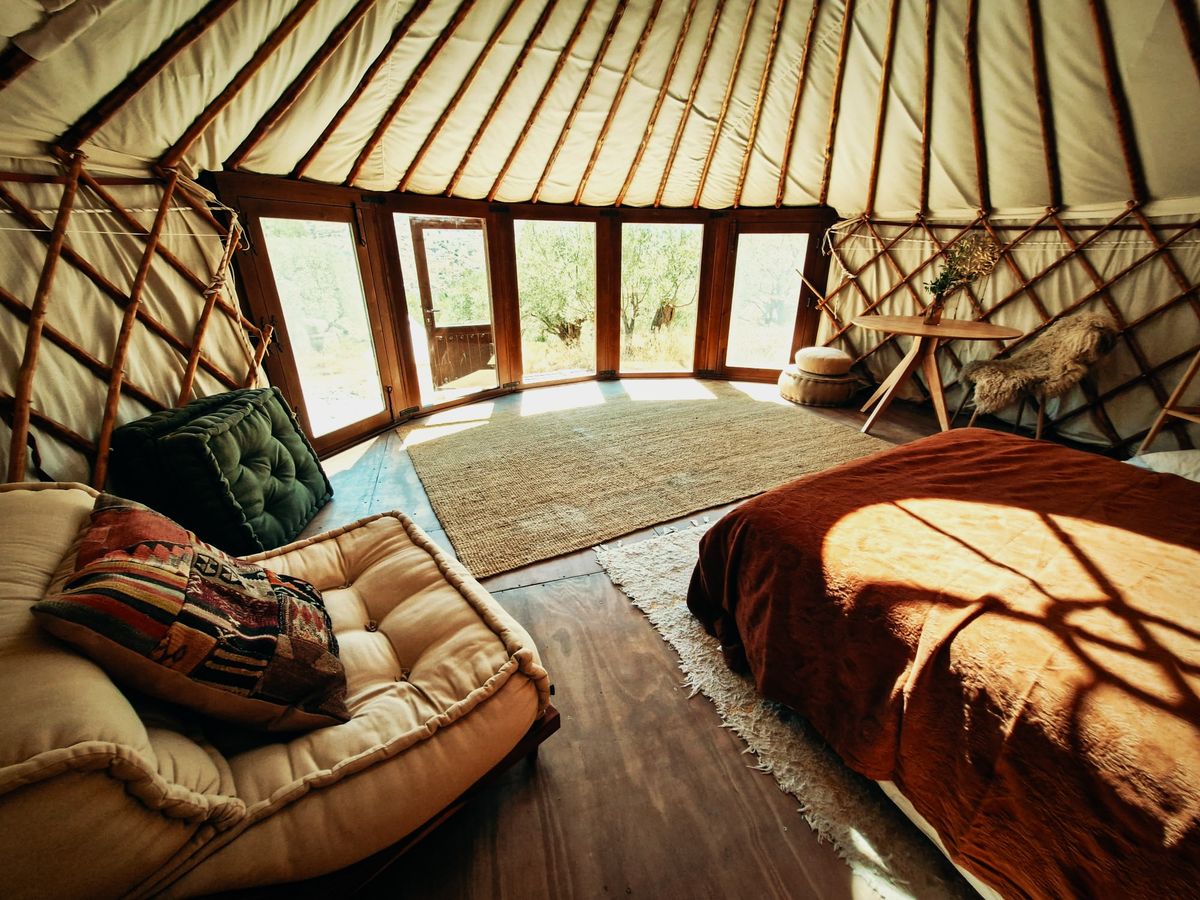
How Warm Is an Insulated Yurt in Winter?
A Practical Answer
from the Workshop
It is probably the question we are asked more than any other.
The short answer is that an insulated yurt can be very comfortable in winter. But there is not a simple yes or no, because warm means different things to different people.
Some people are comparing a yurt with a summer camping tent. Others expect it to behave like a modern house with central heating and thick insulated walls.
An insulated yurt is neither of those things.
What the Insulation Actually Does
Our insulated yurts have natural wool felt insulation, a fire-retardant inner liner and a double-canvas roof.
Together, these make a considerable difference to how the yurt feels and how well it holds its temperature.
The biggest misunderstanding is that insulation creates warmth.
It does not.
The stove or heater creates the warmth. The insulation helps you keep it.
A canvas-only yurt can heat up quickly, but it will also lose that heat quickly when the stove dies down. Add wool felt and the whole character of the yurt changes. It feels quieter, more substantial and holds its temperature far better.

Warm Enough for Where?
We have been making insulated yurts for more than twenty years and have supplied them to customers across the UK and Europe.
One thing that experience teaches you is that there is no single European winter.
A sheltered site in southern France places very different demands on a yurt from an exposed hillside in Scotland. Cold mountain conditions are different again.
Wind, rain, damp, altitude, shade and winter sunshine can all matter as much as the temperature shown on a weather forecast.
That is why we are cautious when someone asks whether a yurt will be warm enough.
The better question is: warm enough for where?
Do Not Forget the Platform
People naturally concentrate on the walls and roof, but the platform is just as important.
If the floor is cold, badly fitted or allowing draughts around the edge, you will notice it regardless of how good the felt insulation is.
For regular winter use, the platform should be well made, kept clear of wet ground and insulated where appropriate.
It should also fit the yurt properly. Gaps around the edge can allow cold air and weather into the space beneath the covers.
A good yurt on a poor platform will never perform as well as it should.
Heating an Insulated Yurt
A properly chosen wood-burning stove can heat an insulated yurt remarkably well.
Visitors are often surprised by how quickly a yurt becomes warm once the fire is established. Because the interior is open and circular, the heat is not divided between corridors and separate rooms.
The size of the stove still matters.
A stove that is too powerful can make a smaller yurt uncomfortably hot. One that is too small may struggle in a larger yurt or an exposed location.
The correct stove depends on the diameter of the yurt, the climate, the platform and how the space will be used.
A yurt also contains less heavy material than a conventional stone or brick building. There is less mass to absorb heat and release it slowly through the night.
The felt helps retain the warmth, but the yurt will still cool if the stove is left out for a long time.
“Now I have lived in my yurt for one year and am so happy. It is very comfortable in winter, with the stove keeping it warm through the night, and it feels steady and safe in storms.” Shanti, Portugal
The Size of the Yurt Makes a Difference
A small yurt takes less energy to heat than a large one.
That may sound obvious, but it is easily overlooked when choosing a size.
A 12-foot yurt and a 24-foot yurt have very different internal volumes. The larger yurt contains far more air and has a greater wall and roof area through which warmth can escape.
This does not mean that a large yurt cannot be warm. It means that its heating and platform need to be appropriate for the space.
It is one of the reasons we ask how a yurt will be used before recommending a size and specification.
Ventilation Still Matters
It can be tempting to close everything tightly once the weather becomes cold, but a yurt still needs ventilation.
Cooking, washing, breathing and drying clothes all release moisture into the air. If that moisture has nowhere to go, it can condense on colder surfaces.
This is especially important in wet climates and in yurts that are only used occasionally.
Regular heating and sensible ventilation are generally better than trying to seal the space completely.
So, How Warm Can It Be?
With wool felt insulation, an appropriate stove and a good platform, an insulated yurt can be comfortably warm through normal winter weather.
It will not behave exactly like a newly built house with thick rigid insulation and permanent central heating.
Nor is it simply a summer tent with a stove placed inside it.
It is a responsive, relatively lightweight structure that warms quickly and, when properly insulated, retains that warmth well enough for year-round use.
The honest answer still depends on where the yurt will stand, how large it is, how the platform is constructed and how you intend to heat it.
Choosing an Insulated Yurt
If you are wondering whether one of our insulated yurts will be warm enough for your plans, tell us where it will be installed and how you expect to use it.
We can help you think through the size, insulation, platform, doors, windows and stove position.
We would rather give you a practical answer based on the site than make a general promise that may not apply.