Handcrafted Yurts
Made Properly
People often come to us after looking at other yurts and tell us that ours look different. They do, and there are reasons for that.
We did not simply start making yurts and decide what looked attractive. We took the time to learn how traditional yurts are made, how their proportions work and why particular materials and construction methods have been used for generations.
We have then spent more than twenty years making yurts ourselves, living with them, listening to customers and refining what we do. We keep traditional methods where they still make sense and change things where experience has shown us a better way.
The result is not one dramatic feature. It is the way the whole yurt works together: the proportions, natural chestnut frame, handcrafted oak crown, carefully fitted covers, doors and windows, insulation and the countless small details that make the finished yurt look and work as it should.
“Love it, absolutely love it. Many thanks to Ratna for her help, and to you and your team for such beautiful craftsmanship. The photos on your site do not do it justice.” Gillian, France
Learning How Yurts Are Made
Our understanding of yurts began with traditional yurt making, rather than with trying to design a commercial product.
Rob travelled to Kyrgyzstan, where he stayed in a yurt-making village and spent time with a family of traditional yurt makers. They showed him the process from beginning to end: the frame, roof, crown, felt, covers and the way the different parts work together.
Later he became friends with a yurt specialist who was living in Mongolia and had spent years studying these structures in detail. He had written a remarkable book on traditional yurt construction and shared much of what he had learned about proportions, materials, construction details and, importantly, why they were done that way.
That knowledge still sits underneath the way we make our yurts. The wall height, roof pitch and size of the crown are not arbitrary. They relate to one another and affect the appearance, balance and behaviour of the finished structure.
Put a Yurt Workshop yurt beside many other yurts and, we think, you can see the difference.
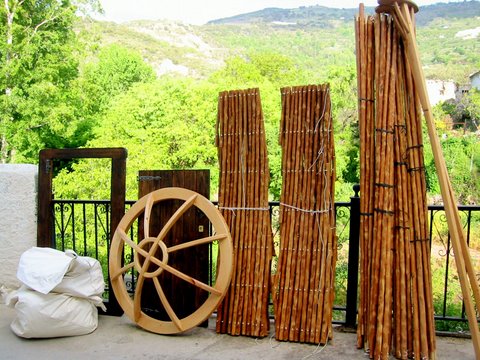
Natural Chestnut Frames
We make the wall frames and roof poles from natural chestnut. Chestnut combines strength and flexibility with a naturally varied surface that gives each frame warmth and character.
The chestnut is selected, shaped and finished in our workshop. It is not hidden beneath paint or forced into complete uniformity. The grain, colour and natural variation remain visible as part of the finished yurt.
It is a material we know well. After years of working with it, we know what to select, what to reject and how to shape each piece so that it works as part of the finished frame.
Handcrafted Oak Crowns
At the centre of every yurt is a solid oak crown, made by hand from 24 separate pieces. The eight-spoke design is strong, well proportioned and has become one of the most recognisable features of our yurts.
The crown is both structural and visual. It carries the roof poles, opens the centre of the yurt to light and gives the interior its natural focus.
Its size also matters. The relationship between crown, roof pitch and wall height is part of what gives a yurt its balance. We do not treat the crown as an isolated component.

Made for Real Weather
Traditional knowledge gave us the starting point. Years of making yurts for customers across Europe have taught us where things need to evolve.
Our yurts live in very different conditions: wet British winters, mountain snow, Mediterranean heat, strong winds and everything in between. Seeing how they perform over many years has influenced the materials and construction we use now.
Insulated and Glass Wall yurts include natural wool felt insulation, a fire-retardant inner liner and our double-canvas roof system. The additional roof layer gives another layer of protection over the roof and insulation beneath. It is a simple idea, but it makes sense.
The outer covers are made from durable proofed polycotton, chosen to combine strength, water resistance and breathability.
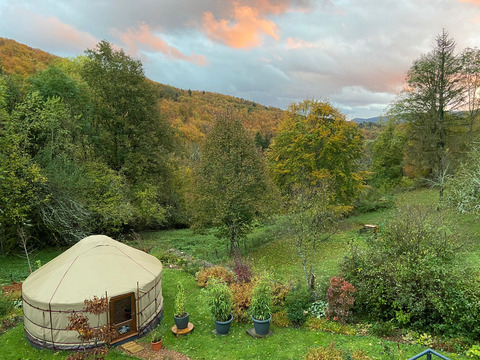
“I really want to order one of your yurts. A friend of mine has one of yours from 15 years ago and she hasn’t had to do any maintenance or replace anything at all. Insanely good quality.” Dominic, Mallorca
Changing the Yurt Without Losing It
Understanding the traditional structure has also given us the confidence to change it where there is a good reason to do so.
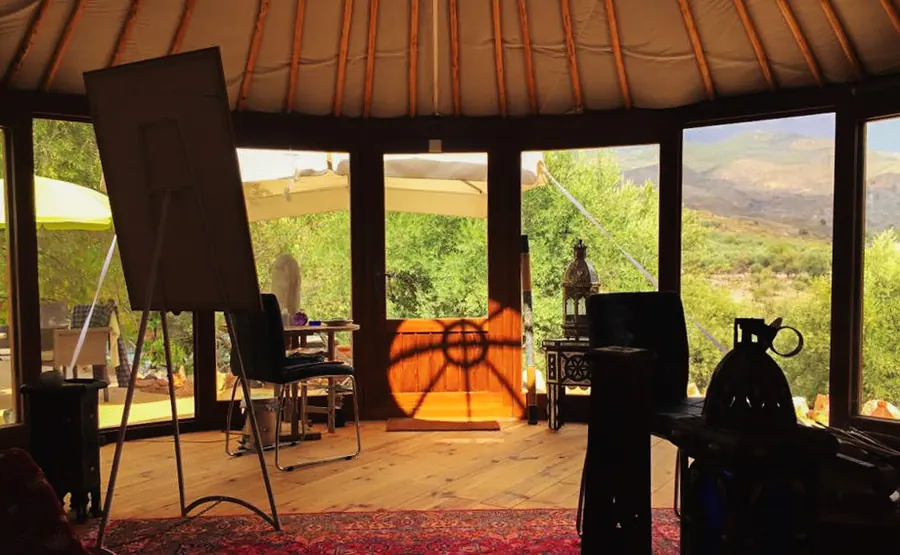
Our Glass Wall yurts are a good example. We wanted to bring much more light and wider views into the yurt, but we did not want to lose the proportions, circular structure and character that make the space feel like a yurt.
Fitted doors, fixed windows and opening glass panels are therefore designed as part of the yurt rather than simply being added afterwards.
We introduced the Glass Wall Yurt in 2013 and have continued refining the system ever since. Different arrangements can be worked out around the size of the yurt, the view, ventilation and the way the interior will be used.
More Than Twenty Years of Refinement
We have made hundreds of yurts for homes, studios, guest accommodation, retreats and commercial projects across the UK, Europe and beyond.
Twenty years of experience does not mean that we have spent twenty years making exactly the same yurt. We have changed plenty.
Some of the refinements are surprisingly small. On a traditional yurt, for example, the end of each roof pole is tied to the wall frame with a short length of cord. We still do it that way. It gives a very secure connection, but it also means that if a roof pole develops a slight sag after years of use it can simply be turned through 180 degrees and used the other way up.
In other places we have deliberately moved away from tradition. Traditionally there are a great many ropes and ties holding the felt and canvas layers in place. We have replaced virtually all of those with Velcro where appropriate. It makes the yurt much easier to put together and also gives a better seal between the layers, helping to keep the weather out.
Our double-canvas roof is another example. Adding a second outer roof gives another layer of protection over the main roof beneath. It is not complicated. It simply works.
This is how the yurts have developed: understanding the traditional construction, living with it, seeing what works and then changing things when we genuinely find a better way.
Made in Our Own Workshop
We do not buy in a generic frame and add our name to it. We make the frames, roof poles and crowns here, and the covers are cut and made for each yurt.
That matters because all of these parts have to work together. Making them ourselves allows us to control the materials, proportions, fit and finish throughout the build.
It also means we are not restricted to selling one fixed specification. Doors, windows, wall height, Glass Wall layouts and other details can be worked through around the way you actually intend to use the yurt.
You can see some of that work on our Inside the Yurt Workshop page, where we show how the different parts are made, assembled and checked before delivery.
Support Before and After Delivery
Buying a yurt usually starts with a conversation. We help customers work through the practical choices before ordering, including size, insulation, doors, windows, wall height and the intended use of the yurt.
We also remain available after delivery. Clear installation guidance is available from one of our experts, along with advice on ongoing care and maintenance.
See the Difference for Yourself
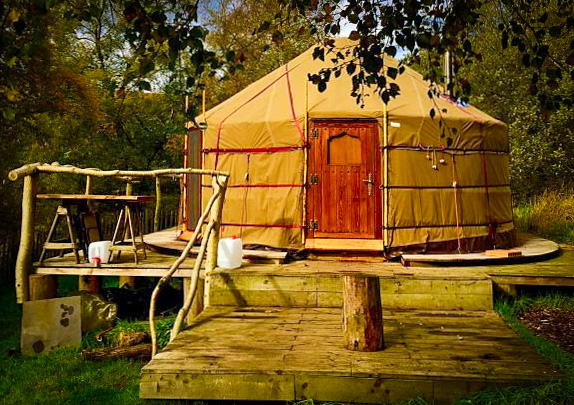
We can explain the materials, the proportions and the details, but the easiest way to understand the difference is simply to look.
Have a look through the website. Look closely at the photographs of the frames, the crowns, the interiors and the finished yurts. Compare them with other yurts you have seen and see the difference for yourself.
You can also read our customer comments , including messages from people who have been living with their yurts for many years.